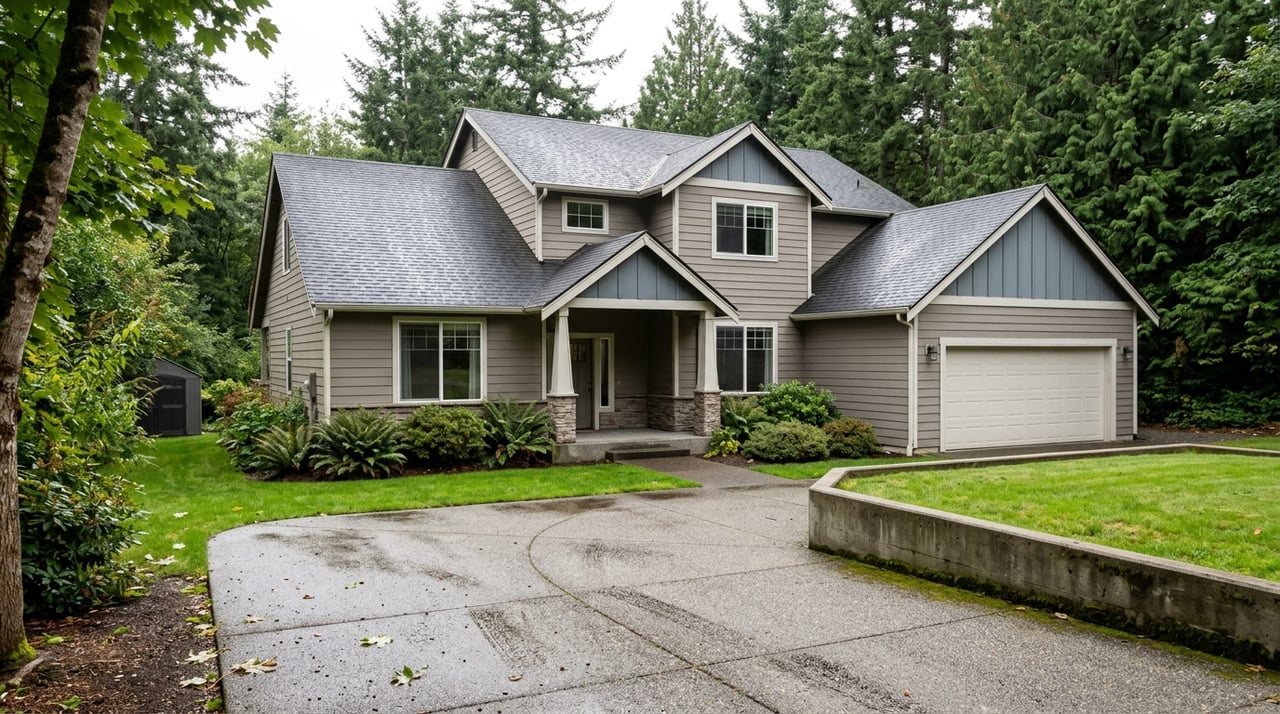
Comparing Vancouver WA Neighborhoods: East vs West
June 25, 2026
June 25, 2026
Trying to decide between east and west Vancouver? You are not alone. Many buyers and sellers in Vancouver, Washington, use this exact comparison to narrow down where they want to live, invest, or list a home. The good news is that each side offers a distinct mix of housing, commute patterns, and everyday convenience, and understanding those differences can make your next move a lot clearer. Let’s dive in.
For practical home search purposes, west Vancouver usually means the historic core and neighborhoods west of I-205, especially downtown and the waterfront west of I-5. East Vancouver usually refers to neighborhoods east of I-205 along corridors like Mill Plain, Fisher’s Landing, and Cascade Park.
That said, this is more of a spectrum than a hard line. Some neighborhoods sit close to I-205 and can feel like a blend of both sides depending on the block, the age of the homes, and nearby amenities.
West Vancouver generally has an older, more urban pattern. City neighborhood profiles describe areas here as more established, with a mix of historic character, mid-century homes, and compact development.
In Esther Short, you are in Vancouver’s historic core near downtown and the waterfront. In Fruit Valley, the city notes the largest remaining set of WWII housing. In Northwest, the housing is entirely single-family and has an older, country-in-the-city feel, while West Minnehaha includes many homes built from the 1950s through 1984, plus some older turn-of-the-century homes.
If you are drawn to neighborhoods with longer local history and more varied home ages, west Vancouver may feel like a better fit. You may also find that lot patterns, street layouts, and housing styles feel less uniform than in many east-side areas.
East Vancouver tends to follow a more suburban and postwar development pattern. In many neighborhoods, you will see a wider mix of later-built homes, apartment communities, retail corridors, and planned residential pockets.
Along the I-205 and Mill Plain area, Oakbrook is described as mostly 1970s single-family housing with some multifamily and retail near SR 500. Fircrest includes classic 1970s homes, newer construction, and apartment communities. Fisher’s Creek highlights varied builders, cul-de-sacs, and privacy, while Cascade Highlands combines single-family homes and apartment complexes with access to transit, highways, and shopping.
If you prefer neighborhoods that feel newer overall, east Vancouver may stand out. Many buyers also like the more suburban layout, especially when they want a mix of residential streets, nearby services, and quick access to major roads.
A simple way to think about the split is this: west Vancouver often feels older and more compact, while east Vancouver often feels newer and more suburban. That is not a rule for every block, but it is a useful starting point.
Both sides include multifamily housing and long-established neighborhoods. Vancouver is also planning for at least 38,000 additional housing units over the next 20 years, so both east and west Vancouver will continue to change over time.
Where you live in Vancouver can shape how you move through your day. For many households, the bigger difference between east and west is not just the home style. It is the route you are likely to use most often.
C-TRAN provides local Clark County service, regional service to the nearest MAX light rail station, and express commuter service to downtown Portland. That gives you options on both sides of town, but the strongest commute patterns tend to follow the major interstate corridors.
West Vancouver is most directly tied to the I-5 and Interstate Bridge corridor. WSDOT tracks the Vancouver-area I-5 corridor from the I-205 interchange to the Interstate Bridge near the Oregon border, which reflects how central that route is for regional travel.
C-TRAN’s I-5 Express runs from 99th Street Transit Center to downtown Portland stops at SW 5th & Morrison and SW 5th & Harrison. C-TRAN also uses bus-on-shoulder service on southbound I-5 between 99th Street and the Interstate Bridge.
If your routine often points toward downtown Portland, west Vancouver may feel more direct. That can be a key quality-of-life factor if cross-river access is part of your weekly schedule.
East Vancouver is more closely tied to the I-205 and Glenn Jackson Bridge corridor. WSDOT identifies I-205 as a key commute and economic corridor running from the Glenn Jackson Bridge to the I-5 interchange.
C-TRAN also uses bus-on-shoulder service on I-205 across the Glenn Jackson Bridge between Vancouver and Airport Way in Portland. In addition, the approved Mill Plain bus rapid transit line would run from East Mill Plain Boulevard toward 192nd Avenue and downtown Vancouver.
If you want strong east-side road connections and access tied to the I-205 corridor, east Vancouver may align better with your day-to-day travel. This can matter a lot if your work, errands, or airport trips naturally pull you that direction.
West Vancouver’s strongest amenity cluster is the downtown, waterfront, and riverfront area. If you enjoy a setting where civic spaces, recreation, dining, and events are close together, this side of town offers a distinctive experience.
Esther Short Park is described by the city as the oldest public square in Washington and the heart of downtown. Nearby, you will find small shops, restaurants, entertainment, riverfront areas, City Hall, the historic courthouse, the convention center, the seasonal Farmers Market, and the Amtrak station.
Waterfront Park and Waterfront Gateway add to that connected urban feel near the river. You also have the Discovery Historic Loop Trail through Fort Vancouver National Historic Site, Officers Row, and downtown, plus connections to the Waterfront Renaissance Trail. Marine Park, the city’s only boat launch, sits on the Columbia River Renaissance Trail.
For buyers who want close access to downtown activity, trails, riverfront spaces, and a more central city atmosphere, west Vancouver often stands out. For sellers, that lifestyle story can also be an important part of how a home is positioned to the market.
East Vancouver’s convenience tends to center around retail corridors, neighborhood parks, and trail access. The feel is often more spread out, with services clustered near major roads and residential pockets nearby.
In Fircrest, Mill Plain Boulevard includes restaurants, shops, hotels, banking, and professional services. Nearby outdoor spaces include Haagen Community Park, Fircrest Neighborhood Park, and Starke Natural Area.
Oakbrook points to retail near SR 500, including Vancouver Plaza, Vancouver Mall, and Andresen Plaza. Fisher’s Creek and Fisher’s Landing East also emphasize local shops, services, and nearby parks. Burnt Bridge Creek Trail stretches from Fruit Valley across I-5 and continues to NE 90th Avenue and Burton Road in east Vancouver, giving both sides an important trail connection.
If your ideal setup includes practical daily convenience, nearby shopping, neighborhood park access, and a suburban layout, east Vancouver may check more of your boxes.
The best side of Vancouver depends on what matters most to you. There is no one-size-fits-all answer, and that is exactly why this comparison is so useful.
You may lean toward west Vancouver if you want:
You may lean toward east Vancouver if you want:
If you are selling, this comparison matters too. Buyers often start with broad location language like “east side” or “west side” before they narrow down neighborhoods, so understanding the differences can help you price and market your home more effectively.
East versus west Vancouver is a helpful shortcut, but it is still just a shortcut. Neighborhood-by-neighborhood details matter, especially near I-205 where the line between the two sides can feel less obvious.
That is why local guidance can make such a difference. When you look beyond the label, you can better match your budget, commute, housing preferences, and daily routine to the right part of Vancouver.
Whether you are comparing a downtown-adjacent home in west Vancouver or a more suburban property in Cascade Park, Mill Plain, or Fisher’s Landing, the goal is the same: find the area that works for how you actually live. If you want help sorting through east versus west Vancouver, reach out to Jacob Sanchez for practical guidance tailored to your move.
Stay up to date on the latest real estate trends.
Get assistance in determining current property value, crafting a competitive offer, writing and negotiating a contract, and much more. Let me guide you through your home-buying journey.
JACOB SANCHEZ
ADDRESS 3706 NW 127TH ST VANCOUVER WA 98685