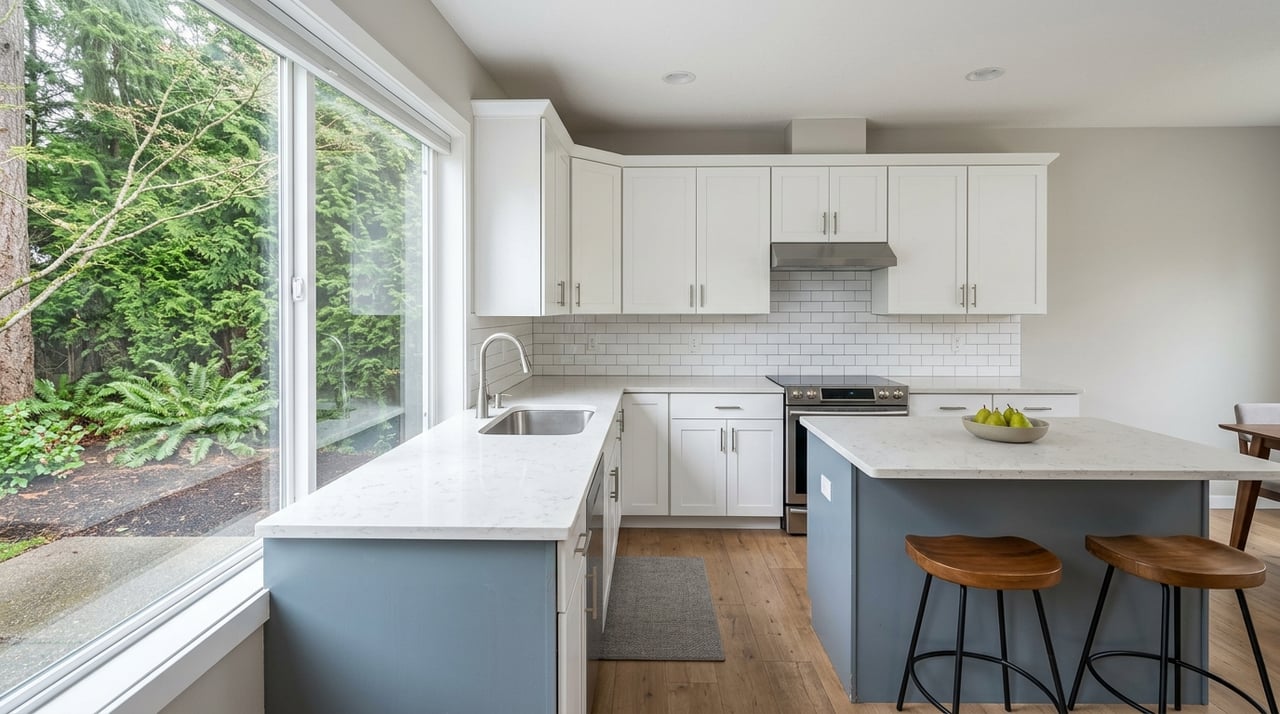
Planning A Move-Up Purchase In Ridgefield’s Growing Neighborhoods
July 9, 2026
July 9, 2026
Thinking about moving up in Ridgefield? You are not alone. As the city keeps growing, many homeowners are weighing a bigger house, a different layout, or a location that fits their next season a little better. If you want to make a smart move without getting caught off guard by timing, inventory, or neighborhood tradeoffs, this guide will help you plan the process with more confidence. Let’s dive in.
Ridgefield is still in a major growth phase, and that changes how you should think about a move-up purchase. Census QuickFacts estimated the city’s population at 16,132 as of July 1, 2025, which was a 55.6% increase from the April 1, 2020 estimate base. The city is also planning for a population of more than 26,000 by 2035.
That growth shows up in housing too. Ridgefield’s 2024 financial report says total housing units increased from 2,248 in 2015 to 6,060 in 2024. For you as a buyer and seller, that means you are shopping in a city that is adding homes, infrastructure, and new neighborhood patterns at the same time.
The current market snapshot also matters. In the June 2026 NWMLS report for Ridgefield map area 1051, there were 21 active residential listings, 10 pending sales, 10 closed sales, and 2.10 months of inventory, with a median sales price of $629,200. Because that sample is small, the median should be read as a monthly snapshot, not a fixed long-term benchmark.
For many move-up buyers, the biggest question is not where to move. It is how to unlock the next purchase without stretching too far. Ridgefield’s estimated median value of owner-occupied housing units was $613,500 in the 2020-2024 ACS data, which helps explain why equity often plays a central role in the move-up plan.
Before you tour homes, get clear on what your current home could contribute to the next purchase. That means looking at your likely sale price, your remaining mortgage balance, your cash reserves, and how much monthly payment flexibility you want going forward. A move-up plan works best when you know both your target budget and your comfort zone.
Jacob Sanchez brings a practical, numbers-first approach here. If you are selling and buying in the same season, accurate pricing and a realistic timeline matter just as much as finding the right next home.
Ridgefield is not one uniform housing market. It is a city with distinct areas, and that matters when you are deciding between more space, newer construction, walkability, or easier access to major routes.
Downtown is the established core. The city describes it as historic and walkable, and planning materials note that Main Avenue and Hillhurst Road reflect more than 100 years of settlement, with older residential structures mixed with newer subdivisions.
This part of Ridgefield also concentrates civic destinations such as City Hall, the post office, the community library, the community center, the police station, and several parks. For a move-up buyer, that can mean trading some lot size or new-home finishes for convenience and proximity to downtown services.
Much of the newer residential growth is happening south and east of downtown. The city specifically points to the Pioneer, 45th, Royle, and Carty Road corridors as key growth areas.
The Royle and Pioneer area sits between downtown and the I-5 junction and has already seen major residential growth, with more undeveloped land and planned utility and trail extensions. The Carty Road subarea covers about 286 acres in the urban growth area southeast of the city limits, making it another area to watch if you want newer development patterns.
Ridgefield also includes other distinct subareas. The Junction functions as a mixed commercial and industrial gateway near the I-5 interchange, while the downtown waterfront area connects Pioneer Street to the wildlife refuge and Lake River.
That broader layout is worth remembering. When you compare homes, you are not just comparing square footage. You are comparing how each part of Ridgefield functions day to day.
One of the biggest move-up questions is simple: newer neighborhood or older street? In Ridgefield, that choice often comes down to what you value most in your daily routine.
Newer subdivisions often offer newer finishes, more planned street layouts, and stronger integration with parks or trails. The city’s trail pages highlight connections through subdivisions and neighborhood parks, including examples near Teal Crest, Canyon View, Clover Hill, Pioneer Canyon, and Osprey Point/Cassini View.
Established areas can offer a different kind of value. Older streets may have mature surroundings and easier access to downtown services, even if the homes themselves need more updating or the layout feels less current.
Neither option is automatically better. The right fit depends on whether you want newer construction features, a more connected path-and-park setting, or a location closer to Ridgefield’s older civic core.
If you are comparing newer Ridgefield neighborhoods, do not treat HOA dues and rules as an afterthought. Ridgefield says most neighborhoods have HOAs, and new subdivisions are required to have one.
That matters because HOA rules can cover landscaping, parking, and rental restrictions. Dues are also commonly used to maintain shared amenities such as walking paths or parks.
When you compare homes, add HOA costs to your monthly housing picture right away. Also review the CC&Rs carefully so you understand how much flexibility you will have with the property after you move in.
A Ridgefield mailing address does not always mean the property is inside city jurisdiction. The city specifically warns buyers to verify the parcel, zoning, and tax jurisdiction before comparing options.
This is especially important if you are looking at homes on the edges of newer growth areas. Parcel location and zoning can affect how you evaluate the property, the surrounding development pattern, and even which local rules apply.
For lot size, the safest approach is to focus on the actual parcel and zoning rather than a neighborhood label. Ridgefield’s zoning code includes low-density residential districts intended for detached homes, along with the more compact City Center district in the older core.
A move-up purchase usually works in one of three ways: sell first, buy first, or coordinate both closings. The best option depends on your finances, your risk tolerance, and how much of your down payment is tied up in your current home.
Selling first gives you the clearest numbers. You know how much equity you actually have, and you reduce the risk of carrying two housing payments at once.
If certainty matters most, this is often the cleanest path. It can also help you shop with more confidence once your sale timeline is established.
Buying first can make sense if you need more control over your move or want to avoid temporary housing. But this option usually works best only if your household can comfortably carry both obligations for a period of time or has access to bridge financing.
Because Ridgefield inventory was at 2.10 months in June 2026, timing can matter. In a tighter inventory environment, some buyers choose to secure the next home first, but only when the financial plan is strong enough to support that choice.
A coordinated close sits between the first two options. This strategy aims to line up the sale of your current home and the purchase of the next one as closely as possible.
This can reduce disruption, but it takes planning. Your agent and lender need to align dates, financing, and contingency strategy so you are not making rushed decisions on either side of the transaction.
If your equity is part of the move-up plan, talk with lenders before your home hits the market. A strong financing plan gives you more options and helps you decide whether you are truly ready to buy first, sell first, or coordinate both.
Possible financing tools can include:
These options are not interchangeable. Borrowing against equity can put your current home at risk if repayments are missed, and cash-out refinancing can increase both your mortgage balance and monthly payment.
That is why it is smart to compare lenders early. Consumer guidance recommends comparing at least three loan offers, and mortgage credit checks within a 45-day window are generally recorded as a single inquiry.
In a fast-growing city, the home you love today may sit near a very different street pattern a few years from now. Ridgefield tracks active projects through a development activity map and monthly development reports that include permits, pre-application conferences, and projects under construction.
For move-up buyers, that information can be useful when comparing newer and edge-of-growth areas. It can help you understand where nearby development is already underway and where city-planned growth is likely to continue.
This is one of the most overlooked parts of home shopping in Ridgefield. Looking beyond the listing itself can give you a much better feel for what the area may look like after your move.
The best move-up purchase is not always the biggest house or the newest subdivision. It is the home that fits your budget, your timing, and the way you actually want to live in Ridgefield.
If you are planning a move in Ridgefield’s growing neighborhoods, start with your equity, compare neighborhood patterns honestly, and sort out financing before you fall in love with the next house. When you want a practical strategy for both the sale and the purchase, Jacob Sanchez can help you build a plan that fits the market you are in now.
Stay up to date on the latest real estate trends.
Get assistance in determining current property value, crafting a competitive offer, writing and negotiating a contract, and much more. Let me guide you through your home-buying journey.
JACOB SANCHEZ
ADDRESS 3706 NW 127TH ST VANCOUVER WA 98685