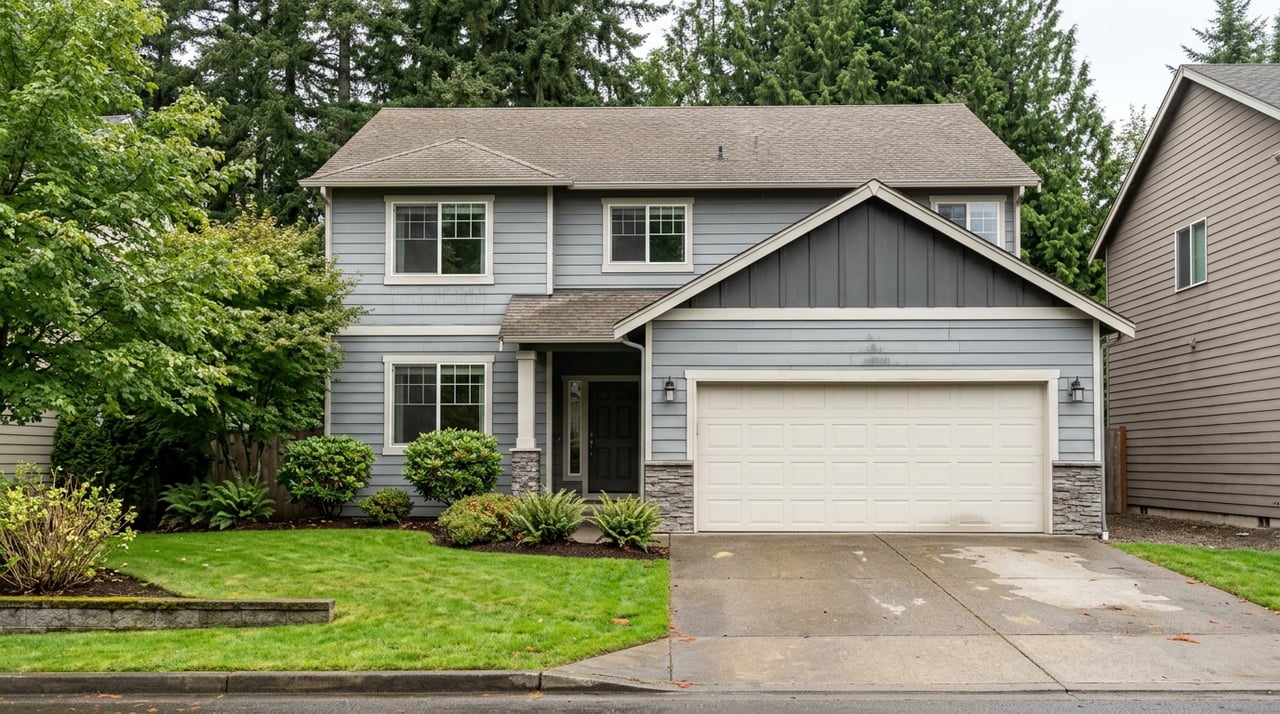
West Linn Neighborhoods And Home Styles Explained
May 7, 2026
May 7, 2026
Wondering why one West Linn home feels like a historic cottage in an old-town setting while another looks like a hillside custom build with sweeping terrain around it? That is because West Linn is not one uniform suburb. It is a city shaped by ridges, river edges, older core streets, and newer hillside pockets, and that mix has a big impact on home style, pricing, and day-to-day feel. If you are trying to narrow down where to buy, this guide will help you understand how West Linn neighborhoods differ and what those differences may mean for your search. Let’s dive in.
West Linn makes the most sense when you look at it as a terrain-driven market. The city identifies a range of micro-areas, including Willamette, Bolton, Robinwood, Parker Crest, Hidden Springs, Marylhurst, Rosemont Summit, Savanna Oaks, Skyline Ridge, Sunset, and the BHT grouping of Barrington Heights, Hidden Creek Estates, and Tanner Woods.
That matters because two homes with the same city address can offer very different settings. One may sit on a flatter, older street with a more traditional neighborhood layout, while another may be on a curving hillside road with larger lots, steeper slopes, and a more private feel.
It also helps to know that neighborhood associations and private HOAs are not the same thing in West Linn. A home’s civic neighborhood identity does not always match its deed restrictions, so if you are comparing properties, it is smart to look at both.
West Linn is not a one-price city. In March 2026, Redfin reported a citywide median sale price of $775,000, while Realtor.com showed a median asking price of $899,000.
Those numbers point to a market with several price tiers rather than one dominant range. In real life, that means your budget may open very different options depending on whether you want historic character, central access, a ridge-top setting, larger lots, or a more custom-home feel.
A useful shorthand is this:
These are directional price bands, not fixed rules. Renovation level, lot shape, views, and home size can change value quickly even within the same neighborhood.
If you picture a classic historic pocket in West Linn, you are probably picturing Willamette. The city’s selective survey describes it as a cohesive collection of primarily late Victorian and early 20th-century American styles.
The area includes 21 Stick and Queen Anne houses and 25 Craftsman bungalows. Many homes sit on double lots, and there is also some newer infill mixed in.
Willamette has one of the strongest concentrations of pre-1930 housing in the city. That gives it a more distinct architectural identity than many other West Linn areas, especially if you are drawn to older design details and established streetscapes.
For buyers, that often means homes with more visible character and more variation from block to block. It can be a strong fit if you want a historic feel rather than a more uniform subdivision look.
Realtor.com listed Willamette’s median asking price at about $539,450, which sits well below the citywide median list price mentioned in the research. That does not mean every home in Willamette is inexpensive, but it does suggest this neighborhood can offer lower entry points than some of West Linn’s hillside and premium pockets.
Bolton and Sunset are strong examples of West Linn’s established, more central neighborhoods. According to the city’s survey work, two Bolton historic districts are made up entirely of mid-century modern houses, while another includes early 20th-century homes tied to the Willamette Falls industrial area.
Sunset shows a different mix. Survey examples there include WWII-era cottages, early ranch and rambler homes, split-levels, and minimal-traditional houses.
Parker Crest is a central established neighborhood with more than 500 residences and has a small-town feel within the city. Redfin reported a March 2026 median sale price of $880,000 there.
Hidden Springs appears to offer a wider spread. Recent sold examples ranged from $473,000 to $799,000, which suggests more variation in home size, condition, and updates.
These neighborhoods tend to fit buyers who want older streets, central access, and less dramatic terrain than some of the ridge areas. If you like the idea of established neighborhoods and practical renovation upside, this group is worth close attention.
Robinwood is one of the clearest examples of how terrain shapes housing in West Linn. The city’s 2025 architectural survey says the neighborhood has 620 buildings dating to 1975 and earlier, with development starting in the 1930s and accelerating in the 1950s and 1960s.
The street pattern tells part of the story. On the east side, deep ravines pushed roads into hilly curves and cul-de-sacs, and some river-edge lots were laid out to maximize riverfront parcels.
The same survey notes that many Robinwood homes are mid-century modern, ranch, split-level, or modern in character. That creates a neighborhood with more architectural variety than a newer subdivision and a stronger connection to the land itself.
Parcel size and shape can also be irregular, which is important when you compare listings. In Robinwood, lot utility and setting may matter just as much as square footage.
Redfin reported a March 2026 median sale price of $955,000 for Robinwood. That puts it above many central established areas and shows how much buyers may value river influence, topography, and distinctive lots.
Marylhurst sits on a ridge overlooking the Willamette River. The city describes it as a 171-acre neighborhood with moderate to steep slopes and average ridge-top elevations around 550 feet.
Savanna Oaks has a similar topographic feel. It also overlooks the Willamette and Tualatin Rivers, with terrain that ranges from flat areas to very steep slopes.
Current listings in Marylhurst show the type of housing many buyers expect in this setting: larger homes on lots around 0.27 to 0.32 acres, including one 1988 home listed at $1.499 million and another around $899,000. That range reinforces the point that even within a ridge neighborhood, values can vary widely based on home size, updates, and site characteristics.
If you are looking for larger homes and a more premium hillside setting, the BHT grouping deserves a look. Redfin’s combined Barrington Heights, Tanner Woods, and Hidden Creek market page showed a January 2026 median sale price of $1.1 million.
Recent sales there were around 4,500 to 4,900 square feet, and current listing language describes Barrington Heights homes as traditional or custom-built. In practical terms, these areas lean larger and more premium than many of West Linn’s older central neighborhoods.
Skyline Ridge sits a little apart from that group. Redfin reported a February 2026 median sale price of $700,000, but active listings also included a 5-bedroom, 4-bath, 4,526-square-foot home on a 0.26-acre lot priced at $1.25 million.
That kind of spread shows why neighborhood medians are only a starting point in West Linn. Skyline Ridge can include very different property types, and Redfin also labels the area as car-dependent with minimal transit.
West Linn commute patterns are anchored by Highway 43, also known as Willamette Drive, along with Willamette Falls Drive. The VISION43 project covers the 3.3-mile Highway 43 corridor from I-205 to the Lake Oswego border, and TriMet’s Line 35 and Line 153 use that spine or nearby connectors.
In day-to-day terms, homes near Highway 43, Willamette Falls Drive, Rosemont, and Salamo tend to have the strongest transit access. Ridge neighborhoods and cul-de-sac-heavy areas are generally more car-first based on the official routes and neighborhood transportation patterns.
That does not make one better than the other. It just means your ideal neighborhood may depend on whether you prioritize a simpler commute route, easier transit access, or a quieter hillside setting.
The smartest way to shop West Linn is to match your priorities to the city’s different neighborhood types. Instead of asking which neighborhood is “best,” ask which one fits the way you want to live and the kind of home you want to own.
Here is a simple way to think about it:
Because pricing can move sharply within each area, it helps to compare homes at the micro-neighborhood level instead of relying only on citywide averages. That is especially true in West Linn, where terrain, lot quality, and home style can change the value story fast.
If you want help narrowing down which part of West Linn fits your goals, budget, and lifestyle, Jacob Sanchez can help you compare neighborhoods with a practical, local approach.
Stay up to date on the latest real estate trends.
Get assistance in determining current property value, crafting a competitive offer, writing and negotiating a contract, and much more. Let me guide you through your home-buying journey.
JACOB SANCHEZ
ADDRESS 3706 NW 127TH ST VANCOUVER WA 98685