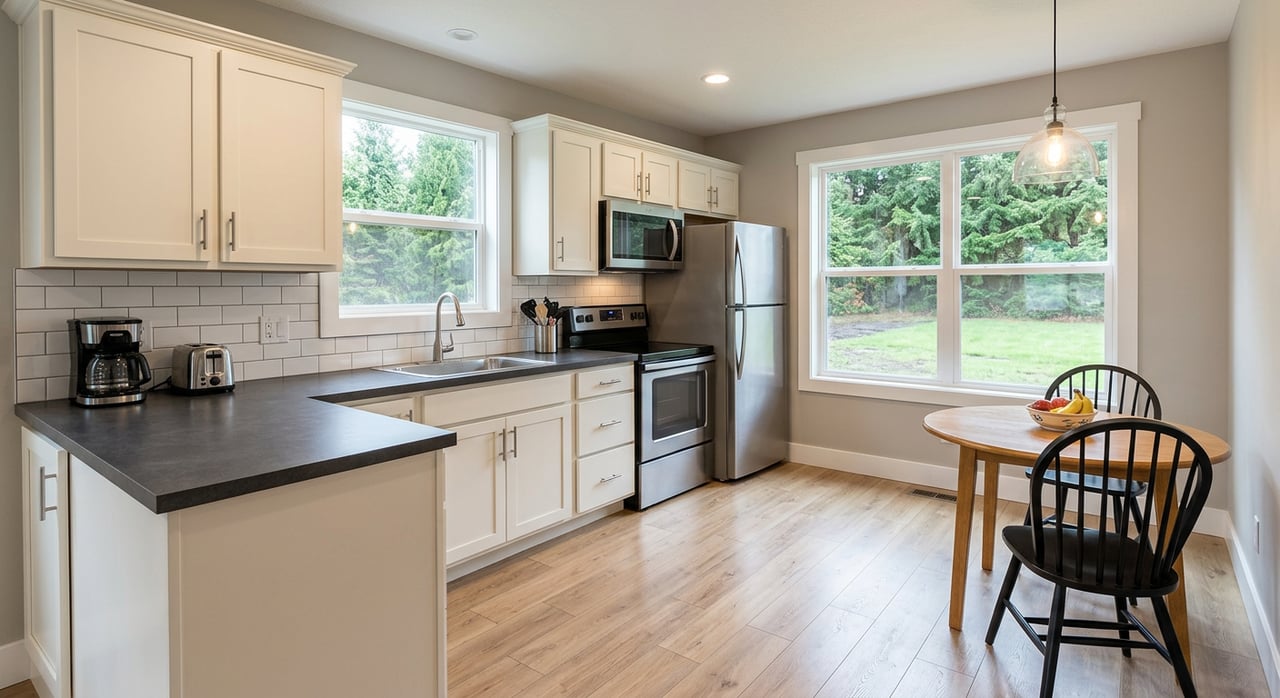
Battle Ground WA Rental Market Insights for Investors
March 5, 2026
March 5, 2026
Thinking about buying a rental in Battle Ground and wondering if the numbers still work? You are not alone. Investors across Clark County are weighing today’s rents, vacancies, and new rent rules to decide where to place capital. In this guide, you will see how Battle Ground performs right now, what tenants want, realistic returns for single-family rentals and small multifamily, and the compliance items you cannot ignore. Let’s dive in.
Battle Ground’s city population was estimated at 22,959 in 2024, and the community skews owner-occupied with about 70 percent owners and 30 percent renters. That owner-heavy mix leaves a meaningful base of single-family rentals that serve families and commuters. Average household incomes are strong by regional standards, which supports ability to pay and reduces payment risk for well-qualified tenants. You get a suburban tenant pool that values space, yards, and stability.
Battle Ground sits in northern Clark County within commuting distance of Vancouver and Portland job centers. Southwest Washington has attracted households who want suburban space and Washington’s tax environment while staying tied to the Portland-Vancouver economy. For rentals, that means steady interest from mid-career renters who prioritize parking, storage, and easy freeway access. It also means you should underwrite with family-size bedrooms and practical finishes in mind.
Battle Ground Public Schools serves the city and surrounding communities, and district information is a common reference point for family renters comparing neighborhoods. Local outdoor assets like Battle Ground Lake State Park and municipal parks add year-round recreation that shows up in rental listing descriptions. Keep property positioning simple and neutral. Proximity to schools, parks, and daily services can help reduce vacancy and support longer lease terms.
Multiple data vendors show similar average apartment-level rents in Battle Ground, with variation by methodology. Yardi’s RentCafe reports an average rent near $1,739, while Zillow’s listing-based view shows about $1,744. Importantly for small investors, single-family homes often rent well above apartment averages. Rentometer’s 3-bedroom house samples show mid-$2,000s for current listings, which aligns with what local SFR tenants will pay for yards and garages.
Regionally, new deliveries in Vancouver and across Clark County lifted vacancies from ultra-low levels to more normal territory in 2024 and 2025. Reports point to county averages near 5 percent, with some Vancouver submarkets higher and older suburban Class B product often tighter. For Battle Ground, that mix supports stable performance for family-sized rentals that are well maintained and priced to the local comp set rather than new luxury baseline.
Why the numbers differ across sites: vendors use different samples. Listing-based tools skew to what is marketed right now. Apartment analytics often lean toward larger buildings. For your underwriting, triangulate with 3 to 5 active SFR listings that match your property’s bedroom count and amenities, then sanity-check with Rentometer and local property manager feedback.
Family renters are a large share of the local rental base, so unit livability matters. You will see consistent demand for:
Policies that respect school-year timing and offer clear renewal options tend to lower turnover. Twelve-month terms with renewal offers sent early can secure retention and reduce vacancy.
Below is an illustrative single-family rental example using public market proxies. This is a simplified view to help you frame expectations.
If you add leverage at an illustrative investor rate near the current 30-year mortgage backdrop, the annual debt service can exceed NOI at 25 percent down, which produces negative cash flow. Rate quotes move week to week, so always use a current lender estimate when you model. For rate context, see the weekly averages from Freddie Mac’s Primary Mortgage Market Survey.
When cap rates are low, you need one or more of these levers:
Stabilized suburban multifamily in the Portland-Vancouver region has been trading in the mid-single-digit yield range, often about 4 to 6 percent depending on age, location, and unit mix. Older Class B suburban assets typically show tighter vacancy than new luxury product, and that pattern has held through the recent supply wave. If you are evaluating a duplex through 8 units in Battle Ground, benchmark gross rent multipliers and cap rates to nearby Clark County sales in similar vintage and size, not to downtown Class A comps.
Washington updated landlord-tenant law in 2025 to limit annual rent and fee increases for most properties. The statute ties routine increases to a formula and sets a maximum threshold, with defined exemptions for very new construction and some regulated housing. Make sure your modeling reflects the current rule and notice requirements before you plan escalations.
Washington requires specific notice windows and forms for rent increases and other changes. Build your renewal calendar around those timelines so you can protect occupancy and stay compliant. When in doubt, confirm current RCW text and any local updates before sending notices.
You should maintain a Washington business license and follow any city or county registration rules that apply to your property type. Battle Ground does not operate a Seattle-style citywide rental inspection program, but local requirements can change. Confirm the latest city and county guidance before closing and before marketing a unit.
Full-service management commonly runs 8 to 12 percent of monthly rent plus a one-time leasing fee. In return, you get screening, rent collection, maintenance coordination, compliance support, and vendor pricing you would struggle to secure as a one-off owner. For out-of-area owners or anyone with more than two or three units, professional management often reduces vacancy and turnover enough to offset much of the fee.
Use this simple checklist to evaluate a Battle Ground rental with discipline:
If you want help sourcing on- and off-market options, building a rent roll, or lining up property management, you can lean on an operator who works both sides of the ledger. With hands-on management of 150-plus units and deep Clark County deal experience, I can help you price, acquire, and operate with confidence.
Ready to run the numbers on a specific address or line up showings that fit your buy box? Connect with Jacob Sanchez to get a custom rent comp set, a first-pass pro forma, and a clear path to your next Battle Ground investment.
Stay up to date on the latest real estate trends.
Get assistance in determining current property value, crafting a competitive offer, writing and negotiating a contract, and much more. Let me guide you through your home-buying journey.
JACOB SANCHEZ
ADDRESS 3706 NW 127TH ST VANCOUVER WA 98685